Start with the question, not the finished product
A new project idea often arrives as a picture of the finished thing: a polished website, an illustrated series, a tool with several features. That picture can be motivating, but it does not tell you which part is worth building first. Before committing to the full version, write down the question you need the project to answer.
Your question might be, “Do I enjoy making this kind of work?” or “Can someone understand the concept without an explanation?” Those are different tests. The first may require a short session making a rough sample; the second requires showing that sample to someone. A personal project does not need a market to justify its existence. It helps, though, to know whether you are testing your own interest, the clarity of the idea, its usefulness to others, or your ability to sustain the work.
Choose one primary question for the first test. If you try to judge the concept, visual style, audience response, and long-term workload at once, mixed results will be hard to interpret. Write down what would help you continue and what might make you change direction. Treat those notes as a guide, not a contract.
Build the smallest version that can answer it
A useful test is not necessarily a miniature finished product. It is the least work that gives you relevant evidence. For a newsletter idea, that might be one complete issue rather than a signup page. For an interactive tool, it might be a clickable mockup if you are testing the flow, or a working version of one action if you are testing whether the interaction is satisfying. For an illustration series, three pieces may reveal more about the process than one highly polished image.
Keep the test small by removing anything that does not serve the question. You can use placeholder copy when testing layout, but not when testing whether the writing is compelling. You can skip branding when testing a tool’s core task, but not when the project is specifically about visual identity. The right shortcut depends on what you need to learn.
Set a modest boundary before starting, such as one page, one feature, or a fixed number of work sessions. The boundary makes it easier to finish a test while the idea is still fresh. It also protects the project from becoming a full build by accident.
Put the idea in front of the right people
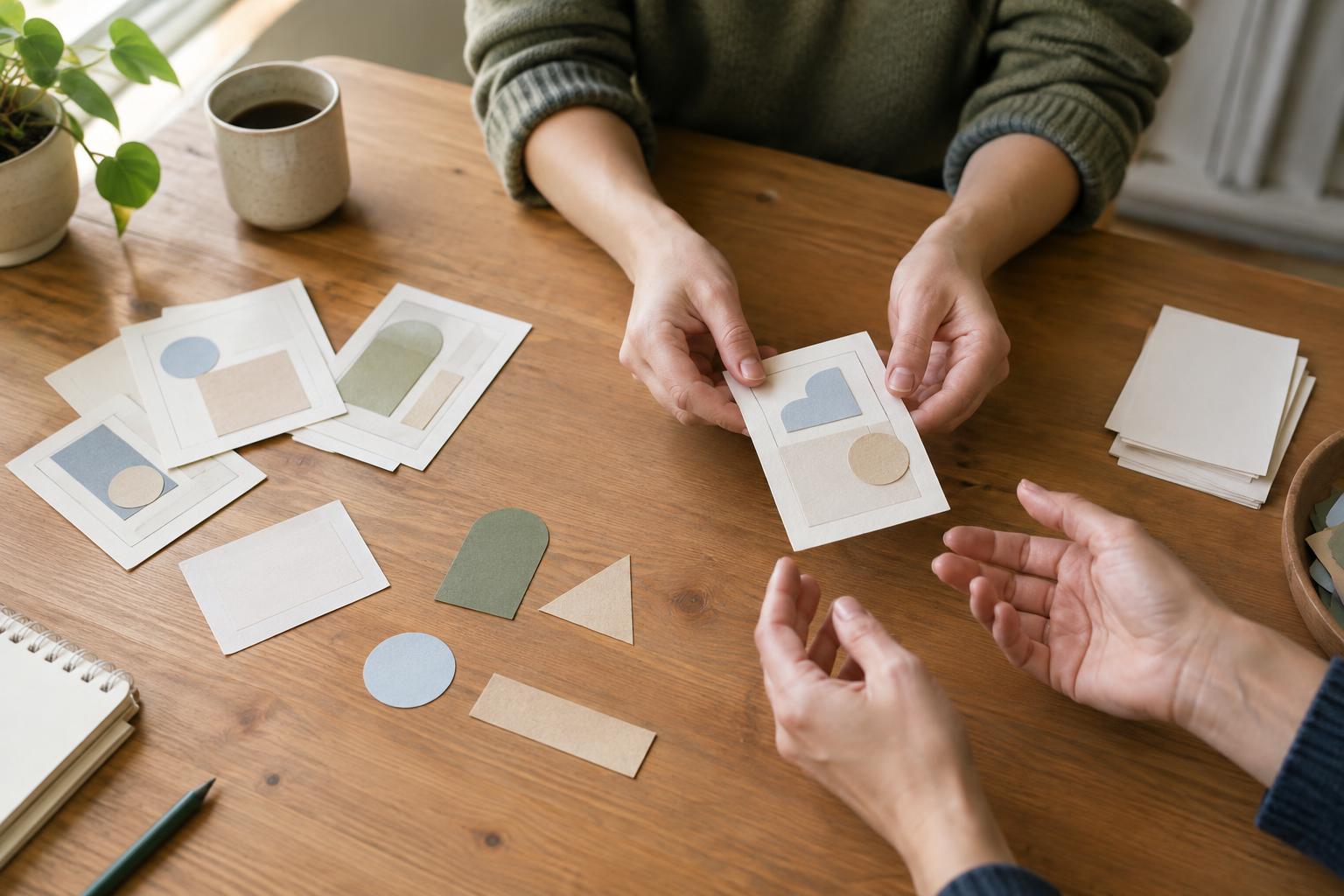
If the question involves an audience, show the small version to people who might actually use or enjoy it. A friend can offer helpful encouragement, but someone familiar with the problem may notice gaps a friend would miss. You do not need a large group for an early check. A few thoughtful conversations can reveal what people understand, where they hesitate, and which assumptions deserve another test.
Ask people to react to something concrete. “Would you use this?” invites a polite guess about the future. More useful prompts include “What do you think this does?”, “Where would you click first?”, and “Which part would you want more of?” If the project is meant to help with a task, ask how the person handles that task now. Listen for specific examples rather than treating enthusiasm as a promise of continued interest.
Avoid defending every decision while someone responds. Note what they tried, what confused them, and what they described in their own words. Feedback is information, not a vote that determines whether you are allowed to make the project. You can keep an unusual idea and still improve how you present it.
Review the test without moving the goalposts
Once the test is complete, return to the question you wrote at the start. Separate what you observed from what you assume. “Two people could not find the main action” is an observation; “nobody wants this” is a much broader conclusion. Likewise, enjoying one afternoon of work may be a good sign without proving that you will enjoy maintaining the project for a year.
Look at the effort as well as the result. Which parts gave you energy? Which parts required more time or skill than expected? If the project depends on a process you dislike, a positive response from others may not be enough to make the full version worthwhile. If the test was enjoyable but its purpose was unclear to viewers, you may need a clearer introduction rather than a new idea.
Decide on one of three next steps: continue, revise and test again, or set the idea aside. Continuing does not mean building everything immediately. Name the next small piece you will make. If you set the idea aside, save the sample and a brief note about what you learned; that makes it easier to revisit without starting from zero.
Make room for curiosity
Not every personal project needs to prove it can attract an audience or become part of a portfolio. Sometimes the value is practicing a technique, exploring a subject, or finding out whether you like a medium. Testing still helps in those cases: a small trial lets you follow your curiosity without turning an experiment into an obligation.
The aim is not to eliminate uncertainty before you begin. It is to take a manageable step that reveals something useful. A well-chosen test leaves you with a piece of work, a clearer question, or both. That is progress even when the full version never gets made.