Define what you are making first
A useful budget begins with a specific outcome. “Make a portfolio piece” leaves too many possible expenses open; “design and publish a six-page digital zine” gives you something to plan around. Write down the format, intended audience, and a clear definition of finished. Then list the steps between your starting point and that result. You may discover that an appealing purchase belongs to a later version of the project, not this one.
Set a spending limit you are comfortable using for the project, separate from money needed for everyday obligations. The limit is a decision-making tool, not a target to spend. If the likely costs exceed it, reduce the scope before buying supplies: make a shorter prototype, use a format you can produce with tools you already have, or postpone a costly physical edition. A smaller finished project is often more useful than an ambitious one that stalls halfway through.
List costs by type, not by shopping cart
Break the project into categories so small charges do not disappear from view. Materials might include paper, fabric, components, packaging, test prints, or replacements for mistakes. Digital costs could include software, fonts, stock assets, hosting, or storage. Also note production and delivery costs such as printing, shipping, and platform fees if they apply. You do not need to buy every item on the list; the point is to see the full range of possible expenses before committing.
Mark each item as essential, optional, or already available. For essential items, estimate a quantity as well as a price. A prototype may need only a few sheets or one sample print, while a final run may require more. Keep one-time purchases separate from recurring charges. A monthly tool can look inexpensive beside a piece of equipment, but it may continue costing money after the project is done unless you cancel it.
Check software and shared resources before buying
Before paying for a new tool, identify the task it needs to perform. Can an app you already use export the required file? Would a free or lower-cost option be enough for this particular project? Check any limits that matter to the finished work, such as export formats, usage permissions, or access to files after a trial ends. Switching tools has a cost in learning time, so the cheapest option is not automatically the easiest one.
The same thinking applies to physical materials. Test with what you have before ordering a large quantity of unfamiliar supplies. Borrowing equipment, using a local shared workspace, or producing one sample can help you decide whether a larger purchase is worthwhile, where those options are available. If an item will serve several projects, you can record its full purchase price separately from the amount you choose to allocate to this one. That keeps the project estimate understandable without pretending the purchase was free.
Leave room for tests and changes
Creative work rarely follows a perfectly tidy plan. A color may print differently than expected, a component may not fit, or an export may need another pass. Add a modest contingency within your spending limit for plausible changes, especially when using a process for the first time. This is not permission to buy unrelated extras; it is room to solve problems that affect the finished result.
Plan a checkpoint before the most expensive step. For a printed project, review a proof before ordering multiple copies. For a physical build, test one connection before buying everything for the final version. Decide in advance what you will do if costs rise: simplify the format, reduce the quantity, replace an optional feature, or pause. Making that choice while the project is still flexible is easier than making it after you have spent most of the budget.
Track spending and close the project cleanly
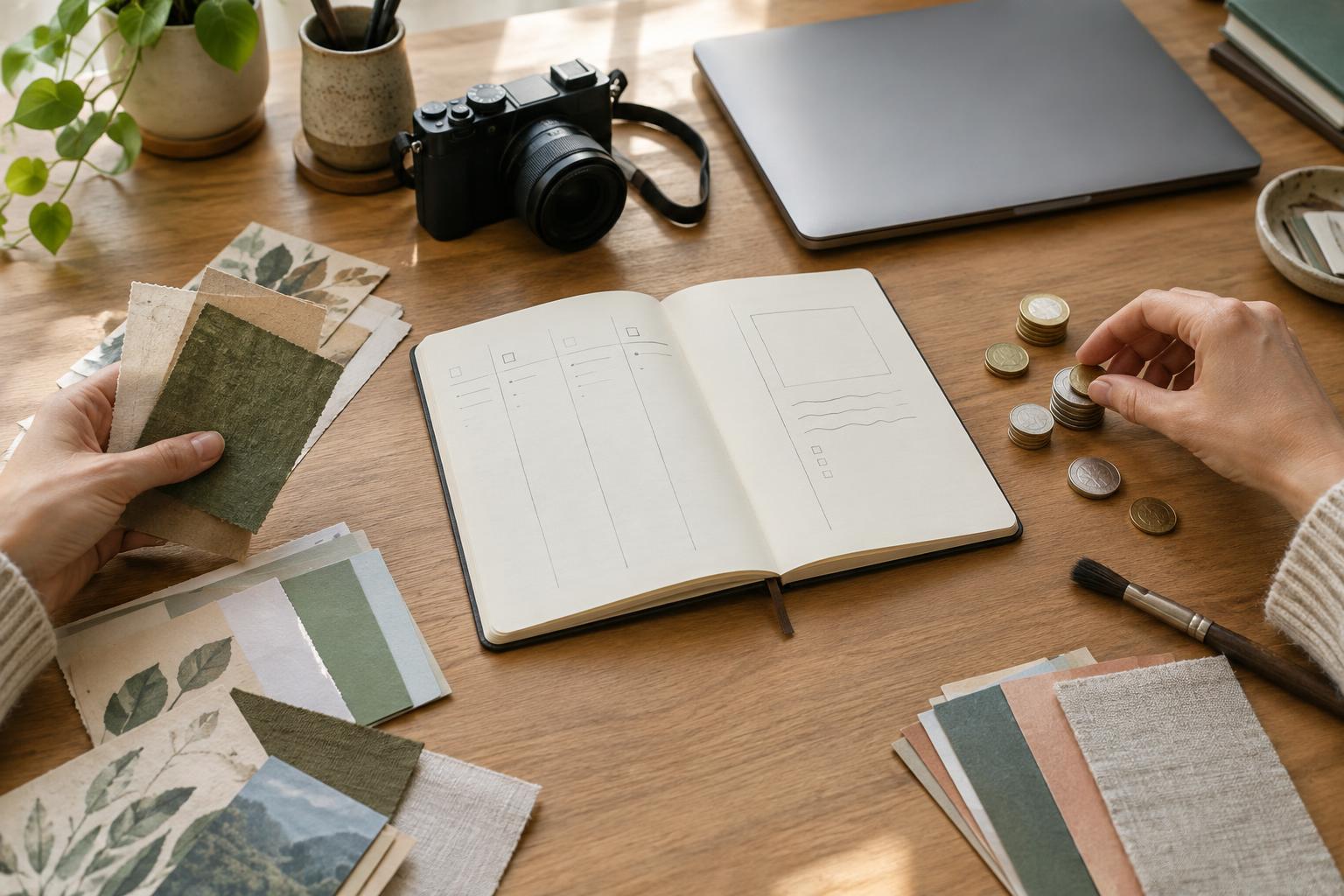
A simple list is enough to keep the budget useful. Record the item, estimated cost, actual cost, and whether it has been paid for. Include small charges and note when a subscription should be reviewed or canceled. Keep receipts or order details together so you can check what you bought, especially if you need more of the same material. Compare your running total with the spending limit at each project checkpoint rather than waiting until the end.
Your time matters too, even if you are not paying yourself from this budget. Estimate the hours available for learning, making, revising, and publishing. If the project is mainly for practice, that time may be part of its purpose; if you need a finished portfolio piece soon, it can guide you toward a simpler scope. After completion, compare estimates with actual costs and note what you would change next time. That short review turns one project’s surprises into a better starting point for the next.