Start with an outcome, not an entire vision
A personal project often begins as an exciting collection of possibilities. A designer imagines a visual identity, a website, a set of illustrations, and a launch campaign. Each part sounds worthwhile, but together they can turn a project meant to be energizing into a second job. Making it smaller does not mean making it less ambitious. It means choosing one piece that can exist on its own.
Describe the finished result in one sentence: “I will publish a one-page site explaining this concept,” or “I will make a set of six icons around one theme.” Name the thing someone could see, use, or read when you are done. If the sentence needs several “and” clauses, it probably describes multiple projects. Pick the smallest result that would still let you explore what interests you.
Give the project clear edges
Scope gets easier to manage when you set limits before making decisions. Choose a format, a quantity, and a level of polish. A photo essay might contain eight images and a short introduction. A type experiment might produce three posters rather than a complete brand system. These limits reduce the number of choices you have to revisit every time you sit down to work.
It also helps to decide what the project will not include. Write a short “not for this version” list for tempting additions, such as animation, a second language, extra templates, or a custom publishing setup. You are not rejecting those ideas forever. You are protecting the first version from work it does not need in order to stand on its own.
Separate exploration from production
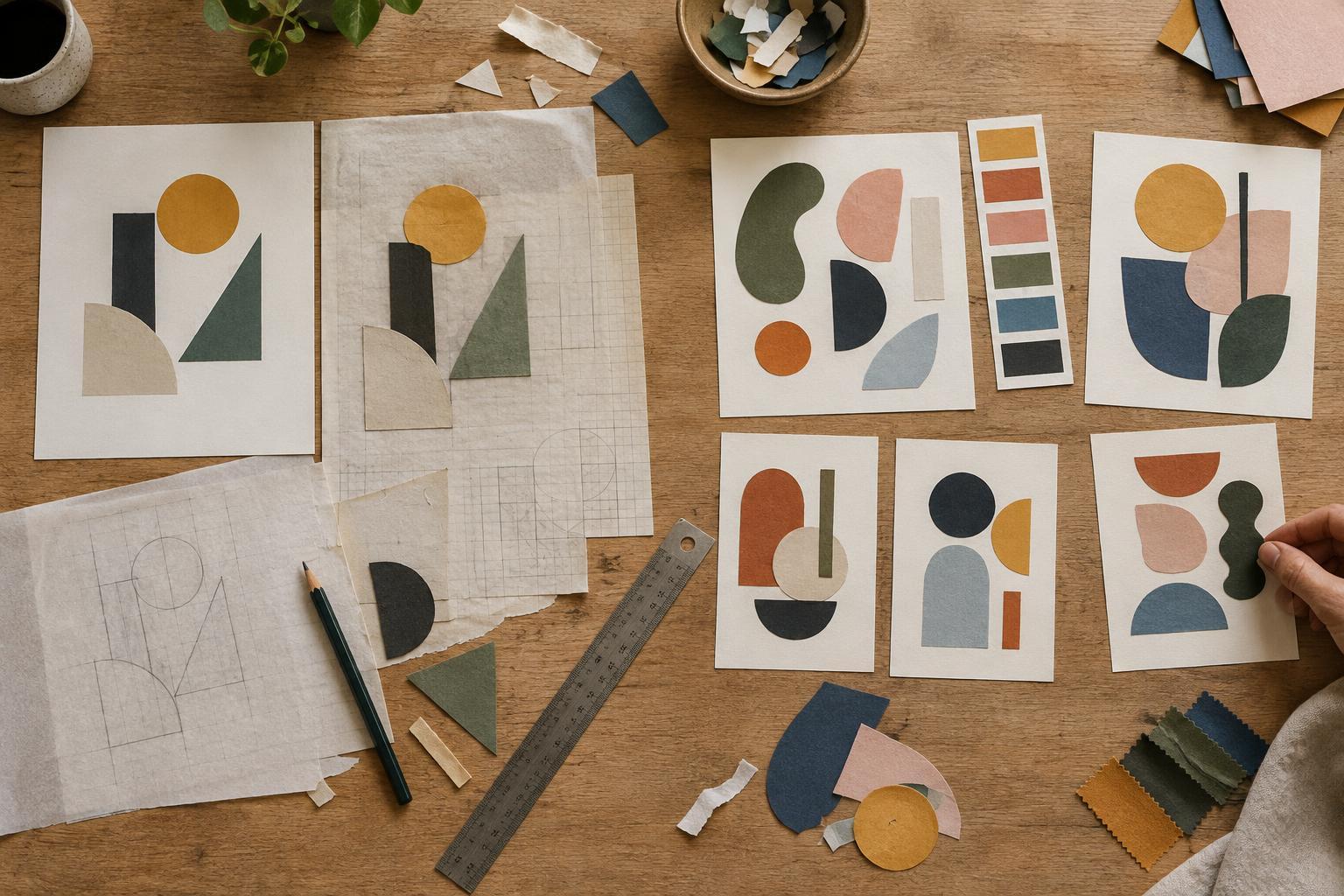
Open-ended experimentation is valuable, especially in a personal project. The trouble comes when every new discovery changes the goal. Give yourself a defined period or a small number of attempts to explore, then choose a direction. For example, sketch five layouts, select one, and build from it. If a better idea appears later, note it without automatically restarting.
Once you move into production, make decisions in service of the chosen outcome. Ask whether a new element helps someone understand or appreciate the piece. If it mainly shows another skill you could use, save it for a follow-up. A project does not have to display your full range to be worthwhile; a focused piece can often communicate an idea more clearly.
Define finished before you reach the difficult middle
The middle of a project is where small tasks tend to multiply. You notice inconsistencies, think of alternate versions, and wonder whether the whole idea needs more depth. A simple completion checklist can keep those doubts from becoming an endless expansion. Include only the requirements needed to share the work responsibly: the core piece is complete, obvious errors are fixed, and any necessary context is written.
Make a separate list for optional improvements. That distinction matters because “could be better” is not the same as “cannot be shared.” If you find a problem that stops the piece from making sense, fix it. If you find an enhancement that would take another week, decide whether it belongs in a later version. You can still care about quality while setting a point at which the work is ready.
Make sharing part of the plan
A project can remain unfinished simply because its final step is vague. Decide early where the result will go: a portfolio page, a personal newsletter, a community post, or a private collection you maintain for yourself. Then identify the smallest amount of presentation it needs. A short description of the idea, your role, and the finished piece may be enough. You do not need an elaborate case study for every experiment.
After sharing, take a moment to note what you would repeat and what you would change. Keep new ideas on a list rather than folding them back into the completed work. Finishing a small project gives you something concrete to learn from, and it frees the next idea to become its own focused project. The aim is not to make every piece tiny. It is to choose a size that lets this piece reach an end.