Start with a finish line you can recognize
“Build a portfolio” or “make a brand identity” sounds like a task, but each phrase hides many decisions. Before making a to-do list, describe what will exist when the project is complete. For a portfolio update, that might mean a published page with three selected projects, short case study descriptions, and working contact links. This does not lock you into one creative solution. It gives you a boundary for deciding what belongs in the project.
Write down who the work is for, where it will be used, and any requirements you already know. Then separate essentials from ideas you might pursue later. A portfolio page needs enough information for someone to understand the work; it does not necessarily need a custom animation or a complete redesign of the site. Keeping optional ideas in a separate list protects the project from growing every time you think of something interesting.
Map the work as stages and deliverables
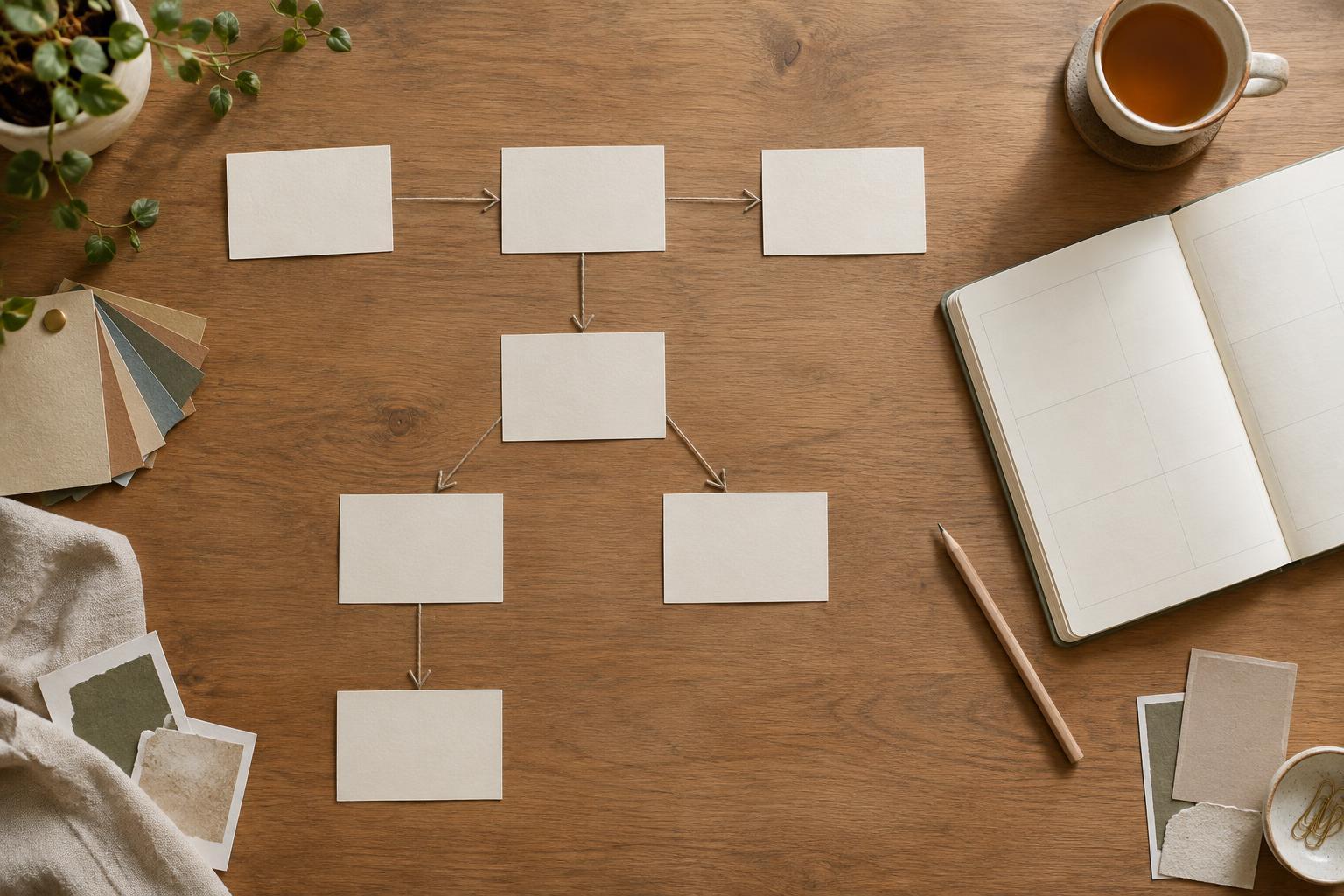
Once the outcome is clear, sketch the broad stages between here and there. Many creative projects involve gathering inputs, exploring options, making a draft, getting feedback, revising, and preparing a final version. The stages may overlap, and some projects will skip a stage entirely. Their purpose is to show the shape of the work, not to create a rigid process.
Give each stage a visible deliverable. “Explore options” could produce three rough layout directions. “Get feedback” could produce a short list of questions and a record of responses. “Prepare final version” could produce exported files, checked links, or a handoff note. Deliverables make progress easier to see than hours spent thinking. They also reveal missing dependencies: if you need approved copy before designing a page, request it before scheduling detailed layout work.
Turn each deliverable into a next action
A useful task describes something you can sit down and do. “Work on case study” leaves you to decide where to begin each time you see it. “Choose five images that show the project’s development” or “write a first draft of the project summary” gives you an entry point. Start tasks with a verb, name the item being worked on, and include a clear stopping point when possible.
If a task still feels hard to start, it may contain several actions or an unresolved decision. Break “design homepage” into steps such as collecting required content, sketching two arrangements, choosing one direction, and building a rough version. Keep the pieces large enough to matter; a list of every click can become its own maintenance project. The right size is a task you can understand quickly and make meaningful progress on in a work session.
Some tasks are really questions. Instead of writing “figure out colors,” write “compare two color directions against the existing imagery and choose one for the draft.” If you cannot make that choice yet, add the task that will provide the missing input. This keeps uncertainty visible rather than burying it inside an intimidating label.
Put tasks in an order that respects dependencies
You do not need to schedule every task at once. First, identify what must happen before something else can start. You might need client assets before refining a design, or a rough draft before asking for useful feedback. Place those dependencies early, along with any questions whose answers could substantially change the work. Smaller decisions can wait until they become relevant.
Estimate effort loosely, then leave room for review and revision. Creative tasks do not always take a predictable amount of time, especially when the direction is still emerging. For a project with several weeks available, a short list of priorities for the current week may be more useful than a detailed day-by-day plan for the entire project. If you collaborate with others, note who owns each task and what “ready for review” means so a handoff does not depend on guesswork.
Keep the plan small enough to update
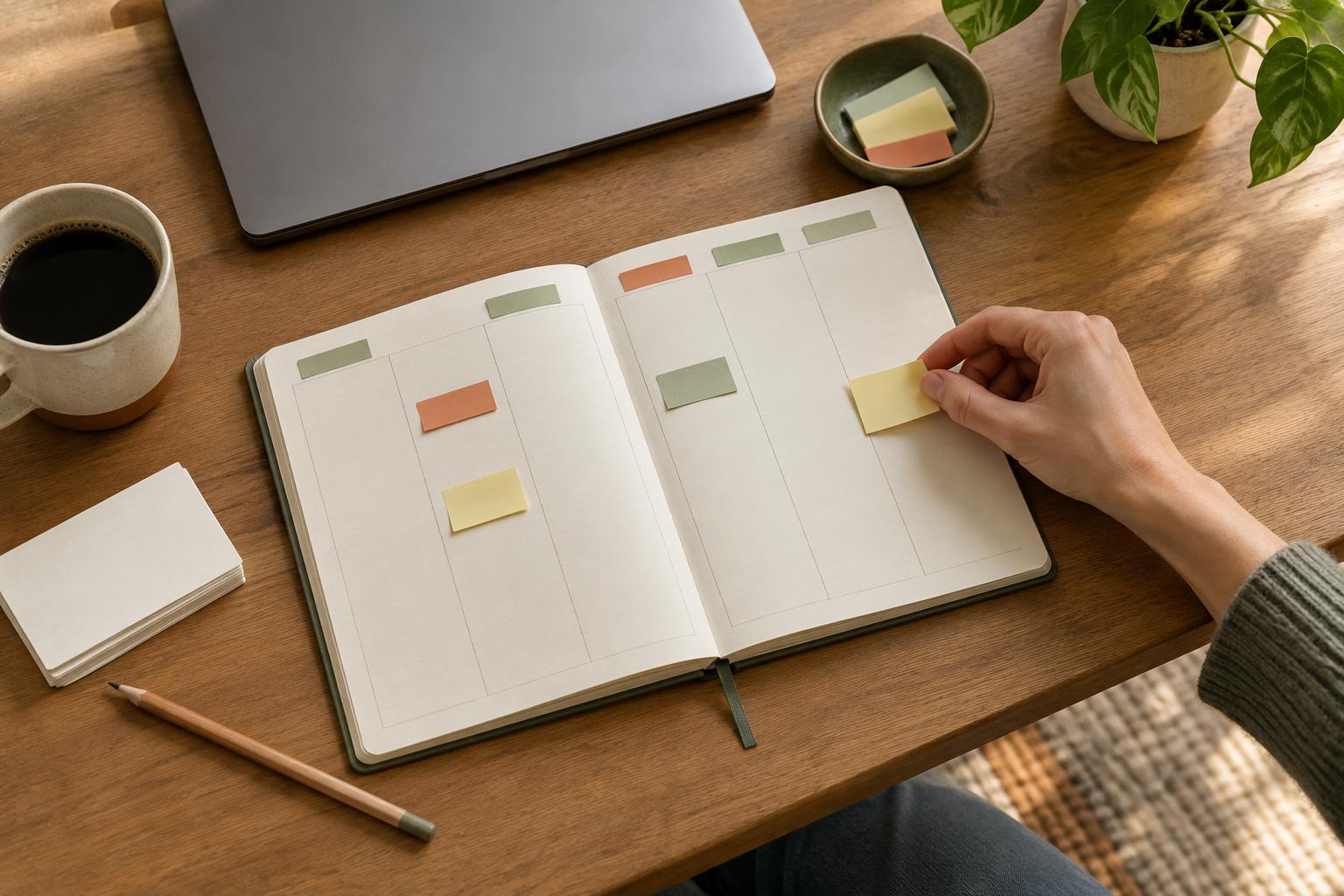
A task list is a working tool, not a contract with your past self. Keep one place for the project’s tasks, and distinguish what is next from what is waiting, in progress, or complete. At the end of a work session, record the next concrete action. That small note makes it easier to return without reconstructing your train of thought.
Review the plan whenever feedback, new information, or a change in scope affects it. Remove tasks that no longer serve the outcome, split tasks that repeatedly stall, and add newly discovered work where it belongs. If a project has expanded, revisit the finish line rather than squeezing more into the same schedule by default. The aim is not a perfect list. It is a clear path to the next useful step, with enough flexibility to accommodate the creative work you discover along the way.