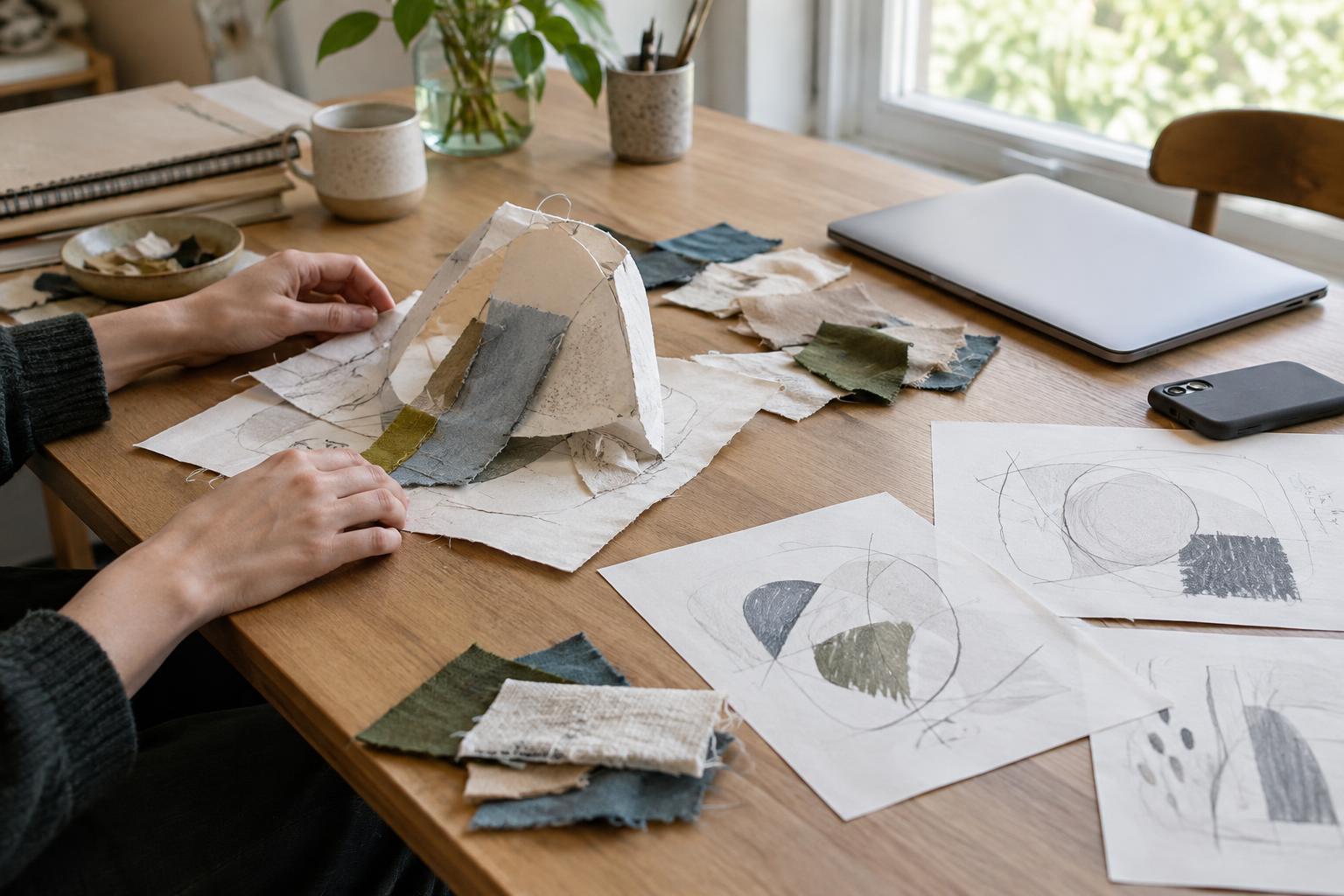
Start with what sharing is meant to do
An unfinished project does not need an audience to be worthwhile. Sharing can help you find a problem you have stopped noticing, test whether an idea communicates clearly, or build a habit of showing your work. It can also create pressure to make every experiment look polished. Before posting anything, finish this sentence: “I want to share this because…” If the answer is specific, you can choose a format that serves it.
Different goals call for different audiences. A rough visual direction might benefit from two trusted peers who can discuss the choices behind it. A nearly complete project may be ready for a broader audience to see how the pieces work together. If your main hope is reassurance that the project is good, consider whether feedback would actually help you take the next step. Sometimes the more useful move is to work privately until you have a clearer question.
Check whether the project is ready for outside attention
Ready does not mean finished. It means you can explain what is settled, what is still open, and what kind of response would be useful. If you are exploring a layout, for example, you might ask whether the hierarchy makes the main idea easy to find. That is easier for others to answer than a general request for thoughts, and it is easier for you to act on.
Also ask whether feedback would arrive at a useful time. If changing direction is still inexpensive, an outside perspective may save you from developing an unclear idea further. If you are in the middle of a fragile experiment, pausing to interpret reactions may break your concentration. You can save screenshots or notes now and share the process later. Recording a stage of work does not oblige you to publish it immediately.
Choose an audience and set boundaries
Sharing is not an all-or-nothing decision. You can send a draft to one collaborator, discuss a question in a small creative group, or post a selected part publicly. A smaller audience is often better when you need detailed critique or feel unsure how to describe the work. A public post may make sense when the idea is understandable without a long explanation and you are comfortable with responses that may be brief, varied, or absent.
Before sharing, check what the project contains. Remove private details, borrowed materials you do not have permission to show, and anything involving another person who has not agreed to be included. If a personal project draws on client work, keep confidential material out of it. Think beyond the main image or video: filenames, annotations, background tabs, and process notes can reveal more than you intended.
You can set conversational boundaries, too. Say which decisions are open and which are not. “I’m testing the navigation, not the color palette yet” gives people a useful starting point. You do not have to accept every suggestion or defend every choice. Feedback is information to consider alongside the purpose of the project, not a vote that determines its direction.
Share enough context, but not every detail
A useful in-progress update gives viewers a way into the work. Briefly describe the project’s aim, show the part you want them to examine, and name the question you are trying to answer. If several versions are shown, explain what changed between them. This helps people respond to the decision in front of you rather than guess what the project is supposed to become.
At the same time, you can leave space for the work to develop. You do not need to promise a launch date, turn an early idea into a public commitment, or narrate every revision. Label exploratory work clearly so that an unfinished detail is not mistaken for a deliberate final choice. If the work changes later, that does not make the earlier update a failure; it shows that the project was still in progress.
Make a decision you can revisit
If you are torn, try a low-stakes version of sharing. Show one detail to a trusted person, ask one focused question, and notice whether the conversation helps you continue. If it does, you can widen the audience later. If it leaves you distracted or pushes you toward choices that do not fit your goal, return to private work for a while.
The best decision may vary from project to project. Share when an outside perspective can improve a decision or when documenting the process supports your goals. Wait when you need room to explore, cannot yet protect sensitive material, or would rather finish a meaningful stage first. Either choice can be deliberate. A personal project belongs to your creative practice before it belongs in anyone else’s feed.