Find the question inside the idea
A single project idea often starts as a subject: neighborhood signs, favorite recipes, imaginary book covers, or portraits of everyday objects. A series needs something more specific to hold its pieces together. Ask what you want to explore about that subject. You might investigate how a familiar object changes meaning in different settings, or how much information a poster can convey using only type and color. That question gives each piece a reason to exist beyond making another version of the first.
Write the idea as one sentence: “I will make a series of [format] exploring [question] through [subject].” Treat this as a working brief, not a rule you can never change. If you struggle to imagine three distinct pieces, the idea may be too narrow. If almost anything could fit, it may be too broad. Adjust the question until it gives you room to experiment and a way to decide what belongs.
Choose a few constraints that create a family resemblance
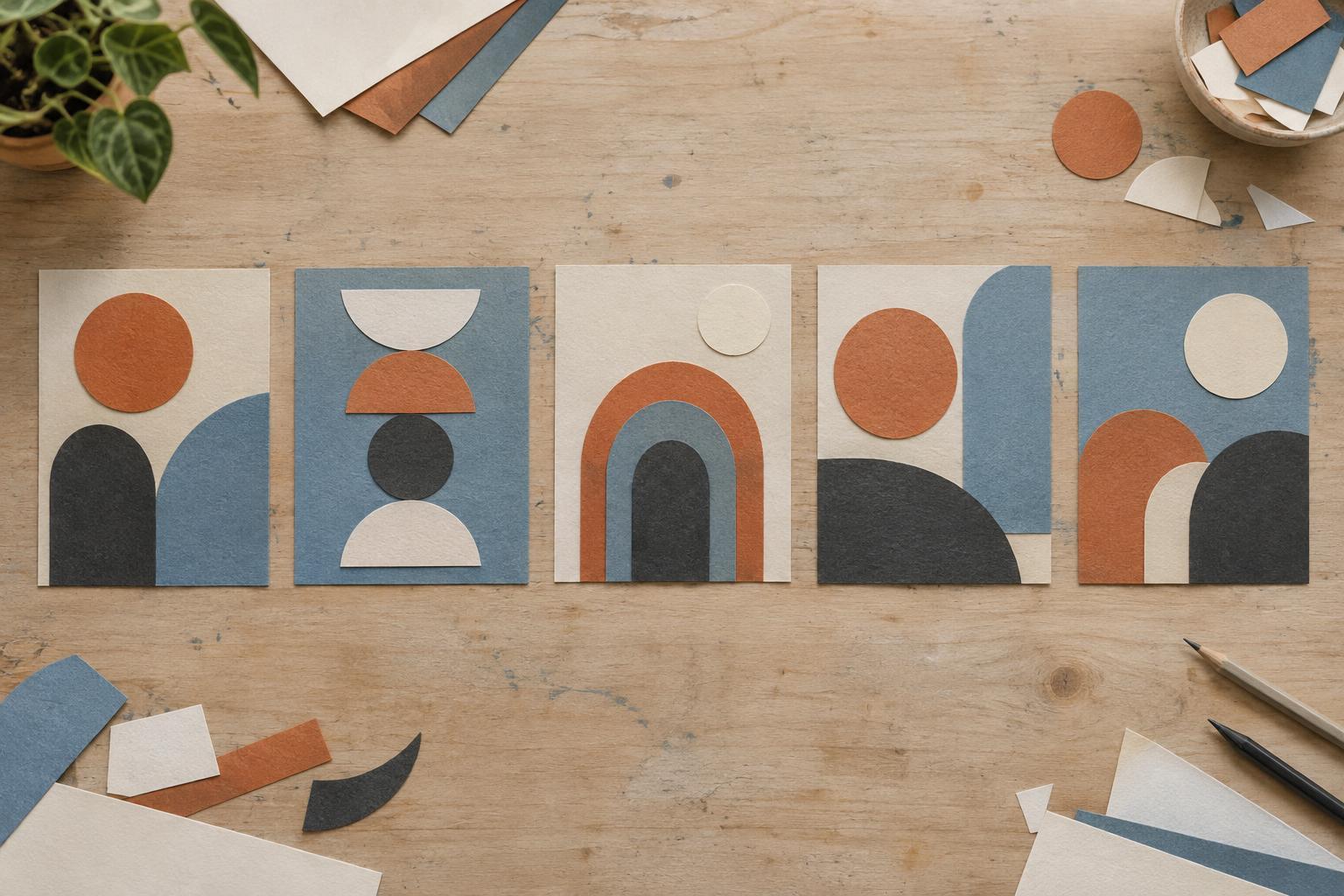
Cohesion does not require every piece to look identical. It helps to choose two or three elements that will stay consistent, such as format, grid, type style, image treatment, color palette, writing voice, or the way each piece is titled. These shared decisions let someone recognize the work as a series even when the content changes. For an illustrated set about everyday objects, you might use the same canvas size and limited palette while allowing the composition and subject to vary.
Pick constraints that support the question rather than merely decorate the work. If your project explores how layouts affect readability, keeping every layout the same would work against you; a consistent set of text and dimensions might be more useful. Write down what is fixed, what can change, and why. This small decision sheet saves you from reinventing the project with every new piece.
Plan variations before polishing anything
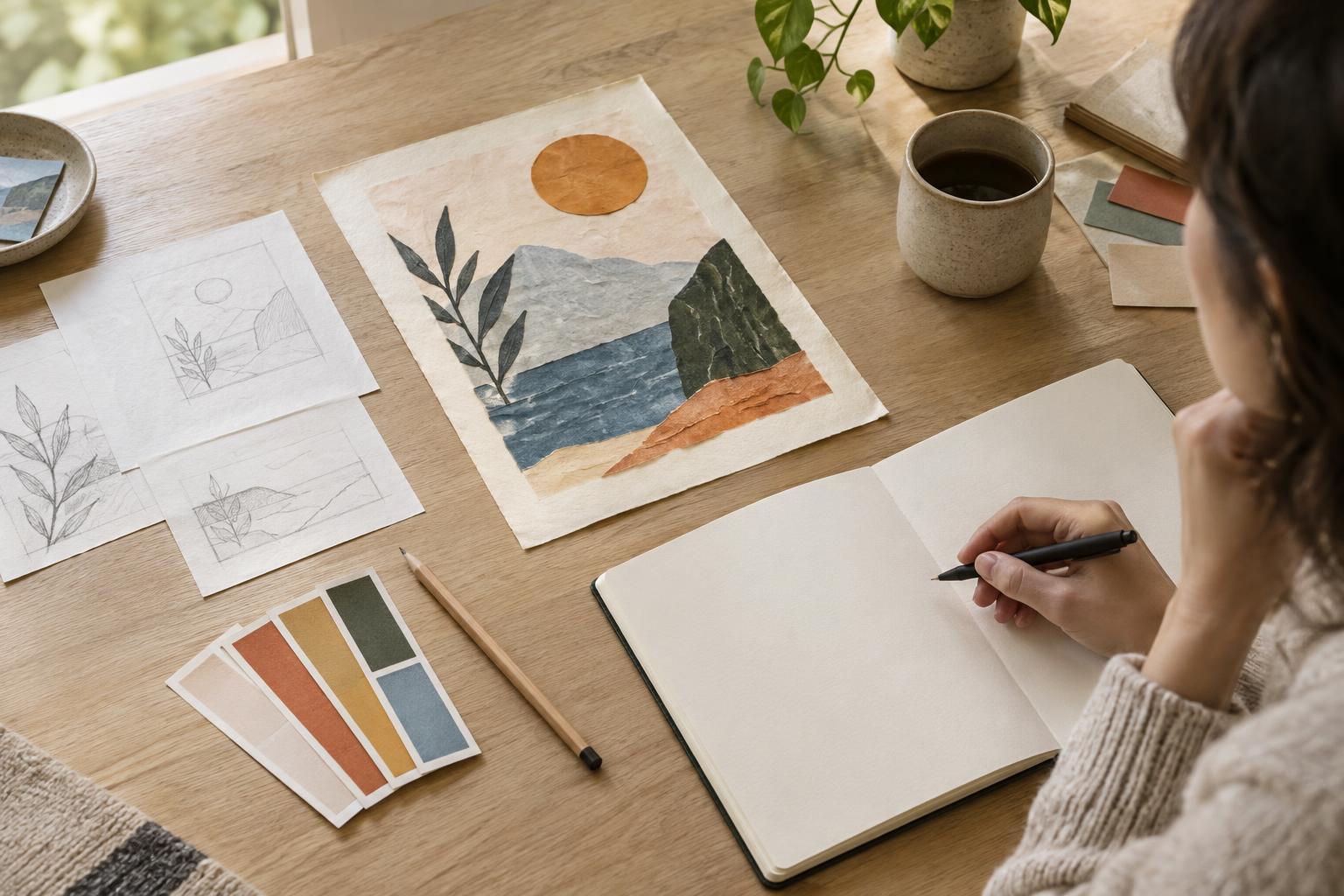
Make a list of possible entries before committing to a final design. Aim for differences a viewer can notice and describe: a change in setting, audience, mood, scale, point of view, or level of detail. If two entries make essentially the same point, combine them or push one in a new direction. A quick outline, rough sketch, or short description is enough at this stage.
Then choose a manageable first set. Three to five pieces can be enough to test whether the idea has range without making the project feel endless. Give each one a distinct role. One might introduce the simplest version of your idea, another test an edge case, and another bring several elements together. You do not need to publish them in the order you make them, but planning the set helps you avoid a collection of unrelated experiments.
Build one piece, then refine the system
Start with a representative piece rather than the most ambitious one. Complete it far enough to reveal practical problems: perhaps the format leaves too little room for text, the palette does not work across subjects, or the process takes longer than you expected. Revise your shared rules in response. A series becomes easier to finish when its system is tested against actual work instead of imagined entirely in advance.
As you make the next pieces, compare them side by side. Look for both continuity and surprise. If one piece feels disconnected, identify which shared element is missing. If the whole set feels repetitive, change an element you deliberately left flexible. Keep brief notes on these decisions so you can work consistently after a break. The goal is not to remove all improvisation; it is to make each new choice contribute to the larger idea.
Give the series a clear ending and presentation
Personal projects can expand indefinitely unless you define what finished means. Choose a stopping point before the work grows: a set number of pieces, a complete range of variations, or an answer to the question in your brief. You can always start a second series later. A clear boundary makes it easier to edit out weaker entries and give the strongest work the attention it deserves.
When you share the series, present the pieces together and explain the connection in a few plain sentences. Show the question, the recurring rules, and what changed from one piece to the next. If you include process work, select sketches or revisions that clarify a decision rather than every step you took. A cohesive series lets viewers see both your finished work and how you develop an idea over time.